What Is Intergenerational Trauma? The Stories We Carry Before They Become Our Own
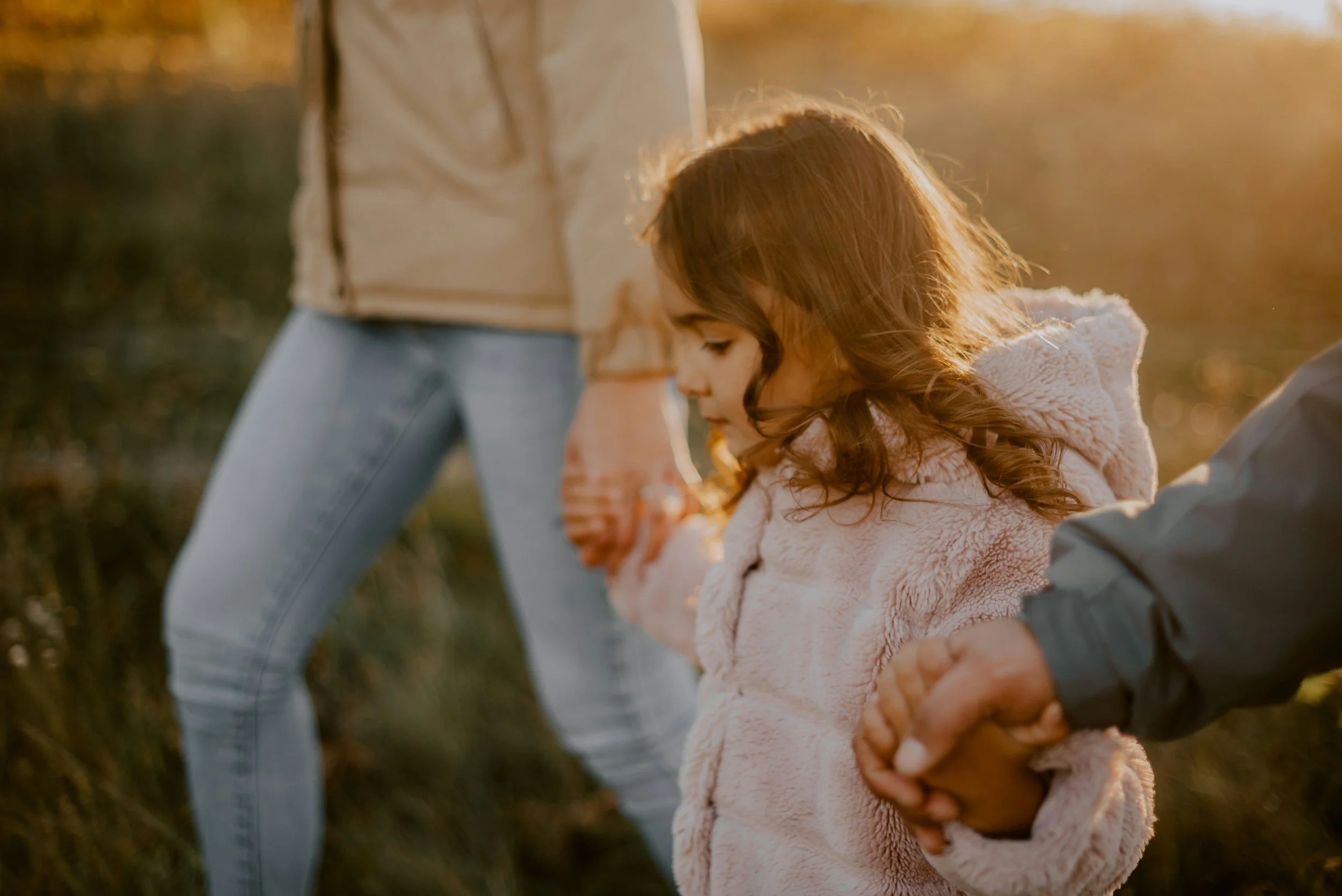
Sometimes the things that shape us most are the things we never learned to name. The pressure to succeed. The guilt that surfaces when we prioritize ourselves. The feeling that our lives are connected to something larger than our own desires. For many children of immigrants, these experiences are not simply personal struggles. They are part of a larger story that has been carried across generations.
Growing up in an immigrant family carries so many nuances. At its baseline, there is often a story of survival passed down from one generation to the next — messages on what keeps us safe, protected, and alive… even if it isn't communicated in these words. Oftentimes, it shows up as an urgency around achievement, a rigidity around the "right" path, or a belief that stability must be protected at all costs. Many of us inherit these messages long before we understand where they came from. Years later, we may find ourselves struggling with guilt, perfectionism, chronic anxiety, or a persistent feeling that our lives should honor something larger than ourselves — the hopes, sacrifices, and dreams carried by the generations before us.
If this sounds like you, you're not alone. No, this isn't just about one hard year or one difficult relationship. It's often something passed down. This is where conversations about intergenerational trauma begin. Let's talk about it.
What Is Intergenerational Trauma?
Intergenerational trauma refers to the ways unresolved pain, survival strategies, beliefs, and emotional wounds are passed from one generation to the next. For immigrant families, these stories may be shaped by migration, displacement, poverty, war, racism, cultural loss, and chronic uncertainty. Even when these experiences are not openly discussed, their impact often lives on through family expectations, relational patterns, and the nervous system itself.
Here's what that actually means: your nervous system doesn't just learn from what happened to you directly. It also absorbs cues from the adults who raised you — their bracing, their vigilance, their relief or dread in certain situations — long before your prefrontal cortex was online enough to make sense of any of it. You can inherit a body that's primed to sense danger in situations your parents once had real reason to fear, even when that danger isn't actually present for you anymore. Read more about how this works in the body in my post on how trauma lives in the body. Sometimes trauma is passed down through stories. Sometimes it is passed down through silence.
The Survival Stories We Inherit
One of the more complex realities of growing up in immigrant families is the normalization of personal sacrifice for the perceived betterment of the family or community.
Many of us were taught, directly or indirectly, that sacrifice was an expression of love. In many ways, it was. Our parents worked long hours. Families uprooted entire lives. Previous generations endured uncertainty, loss, and hardship in hopes of creating something better for those who came after them. Their sacrifices deserve recognition. Yet growing up within these stories can also create an implicit understanding that our lives are not entirely our own — that we carry a responsibility to honor what was given to us and to ensure those sacrifices were not made in vain.
The language of gratitude can become intertwined with the dismissal of our own lived experiences. We may come to believe that because others suffered more, our pain should not matter. Because sacrifices were made on our behalf, we should not feel hurt. Because we have so much to be grateful for, we should not struggle. Let me say that again — because we have so much to be grateful for, we should not struggle.
It's a quiet, brutal kind of math, and most of us never consciously agreed to it. Over time, these messages can make it difficult to trust our own experience. We learn to explain away our feelings before we've fully listened to them. We learn to minimize our needs before we've fully understood them. Slowly, we become fluent in gratitude while losing touch with ourselves.
When Adaptation Becomes Disconnection
Many folks I work with are incredibly skilled at caring for others. They know how to anticipate needs, keep the peace, and take on responsibility — what I've written about elsewhere as emotional caretaking. They are dependable, thoughtful, and deeply attuned to the people around them.
Yet beneath those strengths is often a quieter reality. While they can easily identify what others might be feeling or needing, they often struggle to recognize their own internal experience. Their attention has been directed outward for so long that turning inward can feel unfamiliar. Sometimes it isn't until we're sitting together in therapy that they begin to realize how difficult it is to answer simple questions like, What am I feeling? What do I need? What matters to me?
Over time, adaptation can become a way of life. We learn to shape ourselves around the expectations of family, culture, and community. We become who we need to be in order to maintain connection, belong, or feel safe. Gradually, this can create a profound disconnection from ourselves — not because something is wrong with us, but because self-abandonment was often rewarded while self-expression felt risky.
The feelings that were pushed aside do not disappear. They remain beneath the surface until there is no longer space to contain them. Eventually, the strategies that once helped us navigate our environments begin to feel constricting. We may find ourselves feeling stuck, overwhelmed, or wondering why certain experiences continue to affect us years later. The issue is rarely that the feelings are too much. More often, they have simply gone unacknowledged for too long.
Healing Is About Choice, Not Blame
When we begin exploring intergenerational trauma, the goal is not to blame our families or reject where we came from. The goal is understanding. Many of the patterns we struggle with today developed because they were necessary. Scarcity thinking, perfectionism, emotional suppression, hypervigilance, and people-pleasing often emerged in response to circumstances that demanded extraordinary resilience. These strategies served a purpose. They helped individuals, families, and communities survive environments that may have felt uncertain, unstable, or unsafe.
Healing is not about judging these adaptations. It is about recognizing them with compassion while also asking whether they continue to serve us in the present. In many ways, healing begins when we realize that we may have choices available to us that previous generations did not. That realization can bring both freedom and grief. Freedom, because we begin to imagine new possibilities for ourselves. Grief, because we recognize how much our ancestors carried, how much they sacrificed, and how limited their options may have been. Healing invites us to consider what we want to carry forward — and what we are ready to set down.
The Courage of Becoming Yourself
Healing intergenerational trauma is not about forgetting the past. It is about creating a different relationship with it. It is learning to recognize the inherited beliefs, expectations, and survival strategies that continue to shape our lives and asking whether they still belong.
This work is rarely straightforward. As we begin setting boundaries, honoring our needs, or making choices that feel more aligned with who we are, we inevitably disrupt familiar patterns. Not only within ourselves, but within the systems and relationships that have grown accustomed to us showing up a certain way. There can be discomfort in that. Sometimes guilt. Sometimes fear. Sometimes a sense of uncertainty around who we are becoming when old roles no longer fit.
For many people, one of the hardest questions is not, "What do I need to let go of?" but rather, "Who do I get to be if I no longer need this to survive?" Over time, we begin to discover that belonging does not have to come at the expense of ourselves. That our needs deserve care and attention. That safety can exist without self-abandonment. Perhaps most importantly, we learn that healing is not about becoming someone new. It is about returning to the parts of ourselves that have been waiting to be recognized all along.
If any of this resonates, you don't have to sort through it alone. As a therapist in San Diego offering online therapy across California and Washington, D.C., I'd love to support you in that process — you can read more about how I work on my Approach page, or reach out here to connect.

About Me:
Hi, I’m Stephanie Shao (she/her), Licensed Clinical Social Worker (CA 127453; LICSW DC LC200003288). I am a somatic trauma therapist and specialize in intergenerational trauma, bicultural identities, relational attachment & security, and grief & loss. I enjoy integrating both mind and body in my work, alongside practices of mindfulness and self-compassion.
As a human, I identify as a second-generation Taiwanese American. I was born and raised in the D.C. Metropolitan area, and am currently based in San Diego, California. I’m passionate about collective healing and am a big believer that healing takes place in community!
If you are looking for individual counseling, please message me. I’d love to chat more about your individual needs and to explore if we’d be a good fit. I also publish a monthly newsletter, Kindred Collective, if you’d like to stay in touch about upcoming events and all things identity-related. In the meantime, don’t forget to check out some other blogs here. Stay in touch!